PHOTO/LANE

Journal

Things we argue about on the way home. Written by whoever lost the argument, a few times a year.

2 November 2026 · Bea K.

Why we walk together

Notes after forty walks

Street photography is supposed to be a solitary habit. One person, one camera, a talent for standing still. The books say so, and for the first three years I believed them.

Then a friend in Rotterdam asked six of us to walk the same two kilometres on the same evening, and the pictures were better than anything any of us had made alone that year. Not because we helped each other. We barely spoke. They were better because of what a group does to a street.
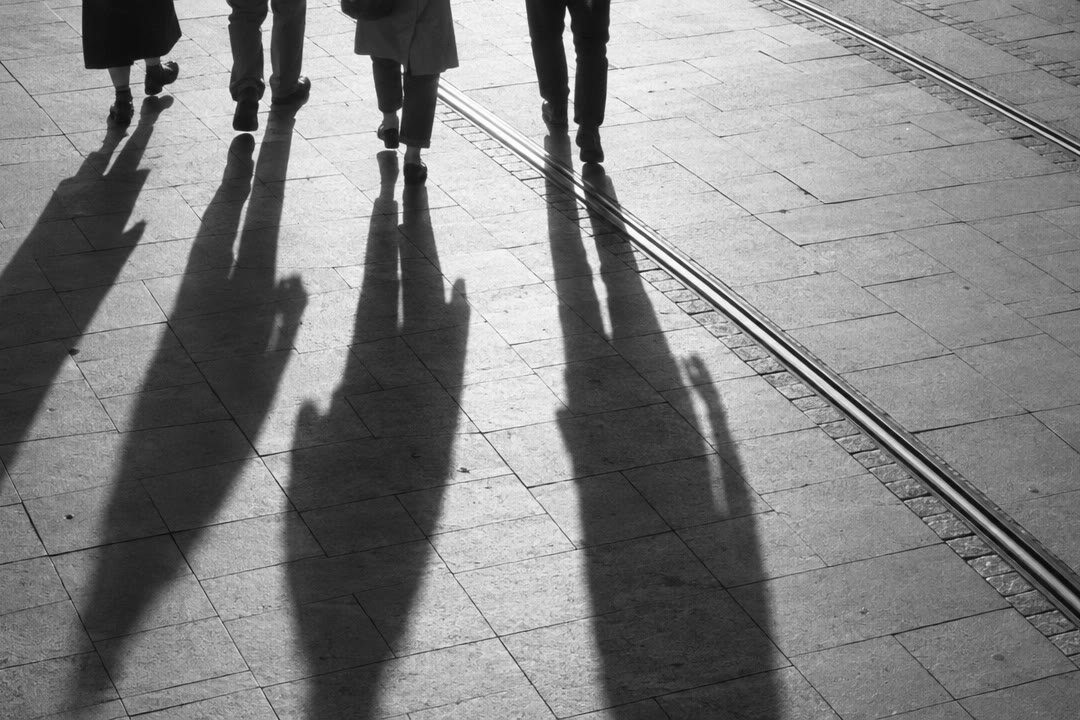
Long shadows of four walkers on a paved square
Walk 41, frame 24. The only group portrait we allow.

A crowd is camouflage

Walking in a group makes you invisible. Nobody looks at the eleventh person with a camera. The first two get the stares and the questions; by the time the rest arrive the street has gone back to what it was doing. If you want the unposed version of a place, be at the back.

The same corner, twelve times

On every walk there is a corner where everyone stops. On walk 41 it was a doorway opposite the tram stop. Three people made almost the same frame, and seeing them side by side taught me more about timing than a year of looking at my own contact sheets. One was early, one was late, one had the lamp.

Somebody else edits

We do not choose our own pictures. Each walker hands over the whole roll and two others pick. It is uncomfortable for exactly one walk. After that you stop photographing for the picture you think you are good at.

None of this is an argument against going out alone. I still do, most weeks. But I no longer think of the group walk as the sociable, lesser version. It is a different instrument, and it plays a street differently.
17 May 2026 · Jonas W.

The quarter hour after rain

On choosing a start time

Every route proposal we receive has a line on a map and a date. Almost none has a time, and the time is most of it.

Wet stone is the cheapest light there is. It doubles every lamp and turns a dull pavement into something with depth. But it only works while the surface is drying: too wet and you get glare, too dry and you get nothing. In most cities that window is about fifteen minutes long.

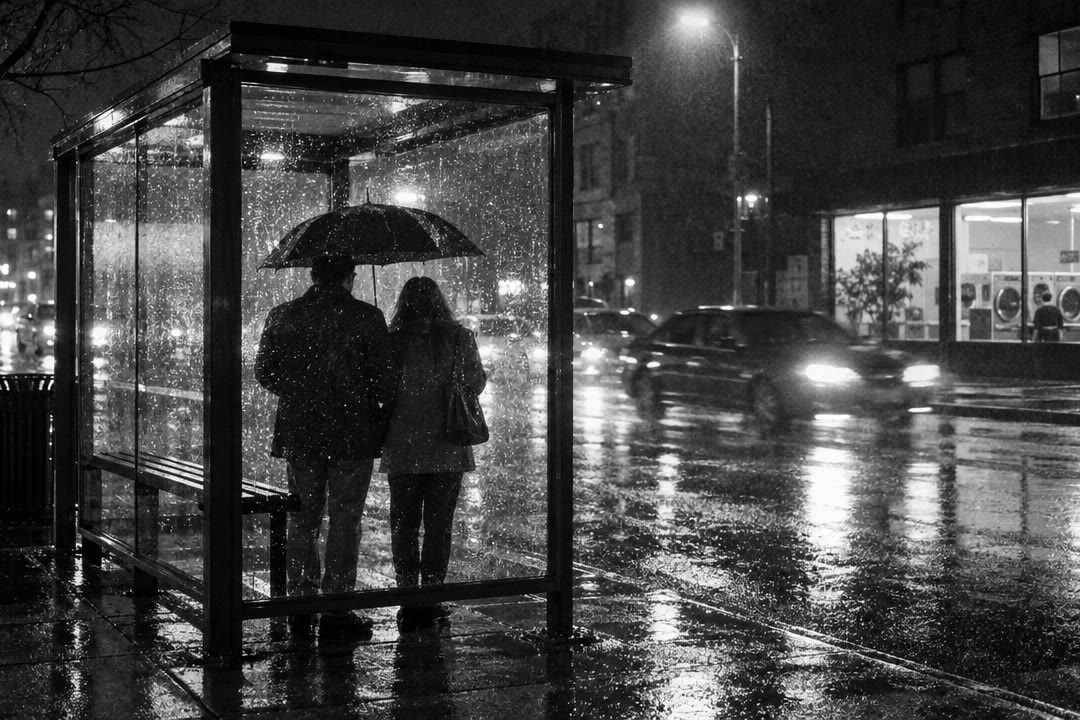
Two people under one umbrella at a glass bus shelter at night, headlights smeared on the wet road
Walk 37, Rotterdam. We waited forty minutes for this rain and it lasted six.

So we have started planning walks backwards. Pick the place where the route should end, work out when the light there is worth having, and subtract the walking time. If the forecast says showers at four, the walk starts at half past five and nobody complains about the pub.

Three practical things, since people ask:

  • A lens hood matters more than a rain cover. Drops on the front element ruin more frames than water in the body.
  • Meter for the reflections, not the sky. The sky will take care of itself.
  • Carry one dry cloth in an inside pocket and do not use it for anything else.

8 December 2025 · Marguerite D.

Backs, hands, shadows

How we photograph strangers

Because everything we publish is free to reuse, we have a problem most photographers can ignore. A picture under an open licence can end up on a poster, in an advert, on a book cover, next to words its subject would hate. We cannot control that, so we control what goes in.

The rule we settled on after a long evening in Antwerp: no stranger’s face is the subject of a published frame. People appear the way they appear to anyone walking behind them — as a coat, a gait, a shape against a window.

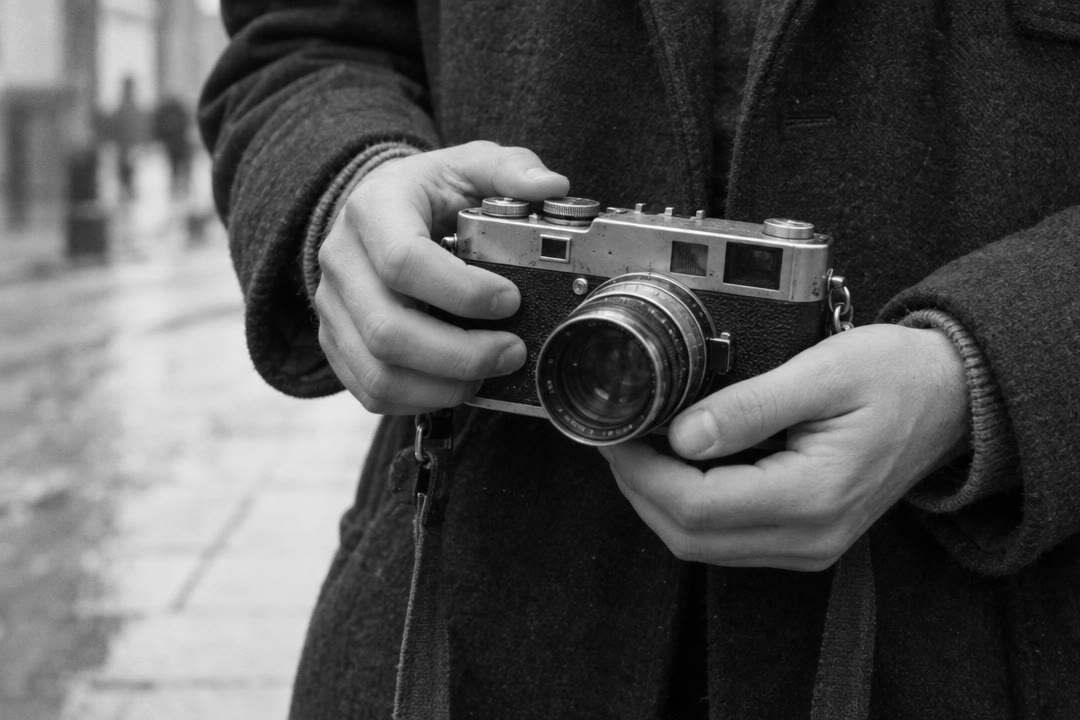
Hands holding a worn rangefinder camera at waist level on a city street
Waist level. You stop hunting for expressions and start seeing posture.

I expected this to make the work duller. It did the opposite. Faces are a shortcut: put an interesting one in the frame and the picture is finished before you have composed it. Take the shortcut away and you have to find the picture in the light, the distance, the way someone carries a bag up two hundred steps.

When a face does matter — a stallholder who talked to us for ten minutes, the neighbour on the stairs in walk 41 — we ask, we show the frame, and we send a print. That has happened nine times in forty-one walks. All nine said yes.

If you find yourself in one of our frames and would rather not be, tell us the walk and frame number. It comes down the same day, no questions.